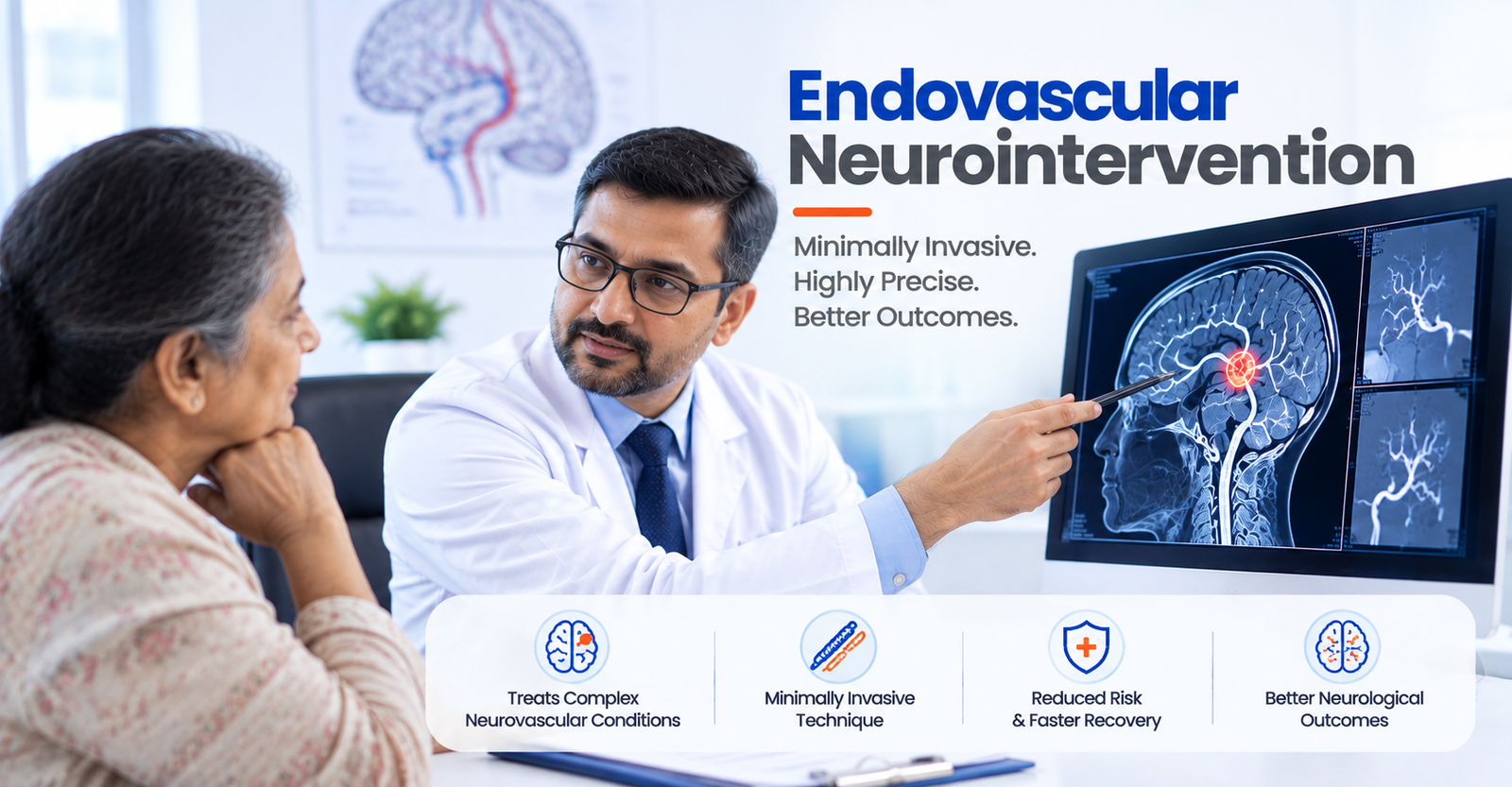
Some conditions affecting the brain and blood vessels need treatment that is precise, carefully planned and focused on the affected area. Endovascular neurointervention is a specialised approach in which doctors use blood vessels as a natural pathway to reach and treat selected neurological conditions.
This approach is used for certain vascular problems of the brain, including conditions such as cerebral aneurysms and other disorders where an endovascular procedure may be appropriate. The right treatment depends on the patient's symptoms, clinical findings and imaging assessment.
In neurovascular care, careful diagnosis and planning are just as important as the procedure itself. Every treatment decision should be based on the individual patient's condition and the nature of the blood-vessel problem.
Dr. Gaurav Sharma provides neurosurgical evaluation for complex brain and neurovascular conditions, with a focus on explaining the diagnosis and available treatment options clearly to patients and their families.

Endovascular neurointervention can be considered for selected conditions involving the blood vessels of the brain. Instead of reaching the affected area through a conventional surgical opening, an endovascular procedure uses a catheter-based route through the blood vessels when clinically suitable.
Dr. Gaurav Sharma's areas of expertise include aneurysm surgery, endoscopic neurosurgical procedures, brain and spine tumour surgery, skull base surgery, craniovertebral junction surgery and brain and spine trauma management. A detailed assessment helps determine the most appropriate treatment pathway.
Endovascular neurointervention is a minimally invasive, catheter-based approach used to diagnose or treat certain disorders involving the blood vessels of the brain and nervous system. A thin catheter is guided through the vascular system to reach the area that needs attention. Depending on the condition, different techniques may be used to manage the vascular problem.
Neurovascular conditions can present in different ways. Some patients may experience sudden neurological symptoms, while others may be diagnosed after imaging for another concern. Cerebral aneurysms and other selected vascular disorders may require specialist evaluation to understand the risks and available treatment options.
Before recommending an intervention, the patient's medical history, symptoms, neurological examination and imaging findings are reviewed together. The size, location and characteristics of a vascular abnormality can influence the choice of treatment. In some situations, observation or another treatment approach may also be considered.
Blood vessels in the brain have a complex anatomy, and even conditions that appear similar on an initial scan may require different management. Detailed imaging and clinical assessment help the treating team understand the anatomy and select an approach that fits the patient's individual situation.
A catheter-based approach may offer an alternative to open surgery for certain neurovascular conditions. Whether it is appropriate depends on the exact diagnosis, vascular anatomy and overall clinical picture. Patients should understand both the potential benefits and possible risks before making a treatment decision.
Dr. Gaurav Sharma is a Senior Consultant – Neurosurgery with over 14 years of clinical experience. His areas of expertise include aneurysm surgery and advanced neurosurgical care. A specialist consultation can help patients understand their diagnosis, whether an endovascular option may be suitable and what other treatment pathways may be available.