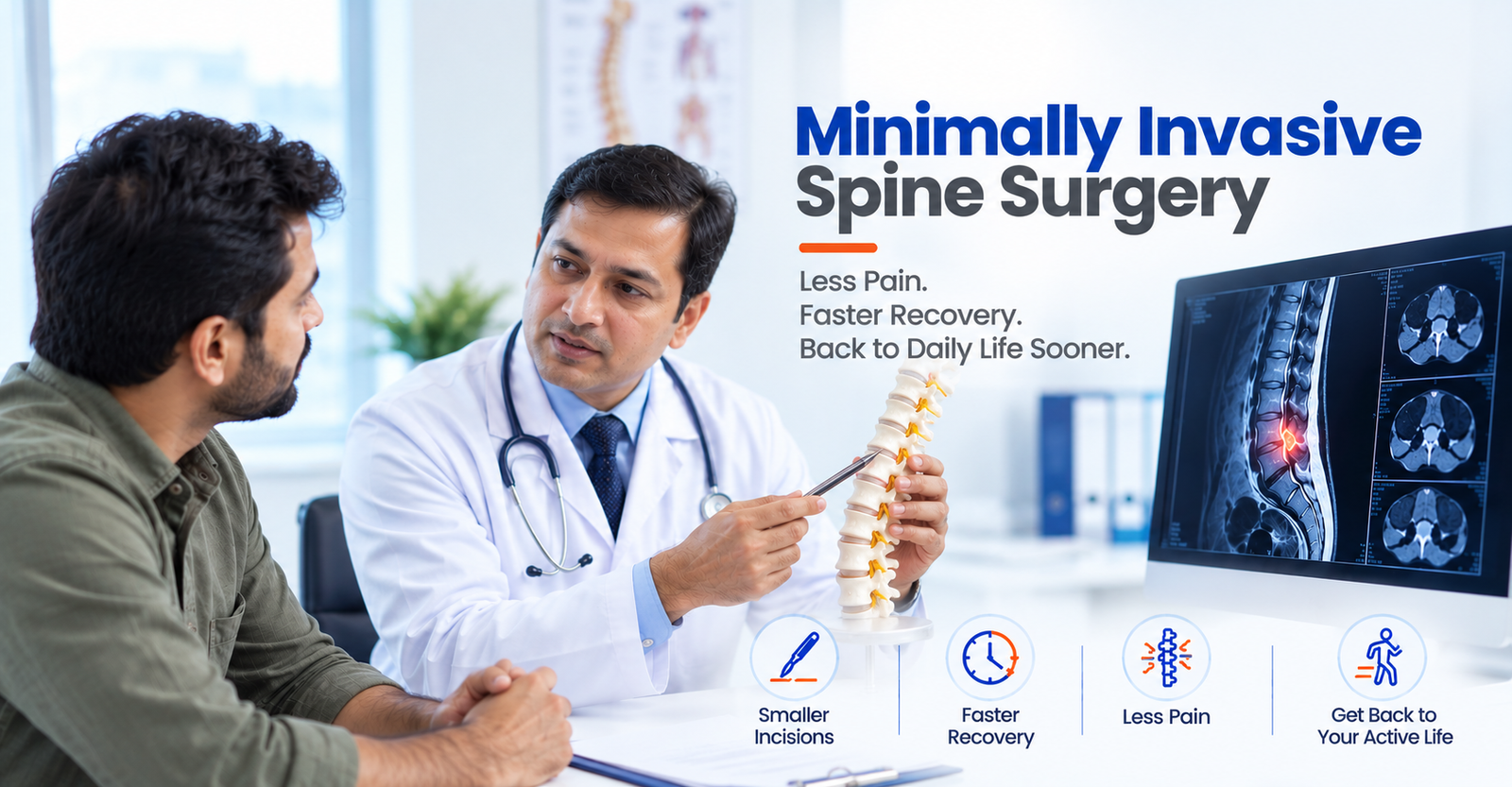
Back and spine problems can affect much more than your ability to move. Persistent pain, stiffness or pressure on the nerves can gradually change the way you work, sleep and carry out everyday activities. When surgery becomes part of the treatment plan, a minimally invasive approach may be considered for selected patients.
Minimally invasive spine surgery uses specialised techniques and smaller access points to reach the affected area of the spine. The approach is not suitable for every condition, so the decision is made after looking at the patient's symptoms, examination findings, imaging and overall treatment needs.
The goal is not simply to make the incision smaller. It is to choose the right approach for the right patient, while keeping the treatment focused on the underlying spinal problem.
At consultation, Dr. Gaurav Sharma evaluates the condition in detail and discusses whether minimally invasive surgery, another surgical technique or non-surgical treatment is appropriate. This patient-specific approach helps keep expectations realistic and the treatment plan clear.

Minimally invasive techniques may be used for selected spinal procedures, including treatment involving nerve compression and other conditions where a less invasive surgical route is clinically appropriate. The exact procedure depends on the diagnosis and the part of the spine involved.
Dr. Gaurav Sharma has specialised training in spine surgery and experience in spinal decompression, fusion, deformity surgery and minimally invasive spine surgery. His treatment planning is based on the individual patient's clinical condition rather than using the same surgical approach for every case.
Traditional spine surgery and minimally invasive spine surgery are different surgical approaches. In minimally invasive procedures, specialised instruments and imaging guidance are used to access the surgical area through smaller openings where clinically suitable. The aim is to address the spinal problem while limiting unnecessary disruption to surrounding tissues.
A minimally invasive approach may be considered for certain patients with spinal conditions that require surgery. However, the presence of back pain alone does not mean that surgery—or minimally invasive surgery—is required. A detailed assessment is important before any treatment decision.
Depending on the procedure and the patient's individual condition, a minimally invasive approach may involve smaller surgical access, less disruption of surrounding tissues and a recovery pathway that differs from conventional open surgery. Results vary according to the diagnosis, procedure and individual patient factors.
Surgery is considered when the clinical condition and treatment goals support it. Before recommending a procedure, the patient's symptoms, neurological examination, imaging and response to other treatments are taken into account. Where appropriate, non-surgical options may be discussed as well.
The spine is a complex structure, and two patients with similar symptoms may have very different underlying problems. That is why the surgical technique, level of treatment and recovery plan should be tailored to the diagnosis rather than selected simply because an approach is minimally invasive.
Dr. Gaurav Sharma is a Senior Consultant – Neurosurgery with over 14 years of clinical experience. His areas of expertise include specialised spine care, spinal decompression, fusion, deformity surgery and minimally invasive spine surgery.